When Worship Becomes Noise
“Take away from me the noise of your songs; to the melody of your harps I will not listen. But let justice roll down like waters, and righteousness like an ever-flowing stream.”
Amos 5:23–24, ESV
Amos 5 is a hard word for people who still know how to gather, sing, serve, give, and speak the language of faith. The danger in this passage is not that God’s people had abandoned religion. The danger is that they had learned how to keep religion alive while ordinary life was drifting far from God.
The festivals continued. The offerings continued. The songs continued. The sanctuaries were busy. From the outside, worship looked alive. But God saw what the worship could not hide. The poor were being crushed. The courts could be bought. The vulnerable were being stepped over. Mercy had become thin. Justice had a price. The sound of worship was loud, but the life underneath it was not surrendered.
That is what makes Amos so unsettling. God does not merely critique bad worship. He rejects worship that has become disconnected from obedience. He looks at practices He once commanded and says, “Take it away.” Not because singing is wrong. Not because gathering is wrong. Not because offerings are wrong. God rejects them because His people were using them as a substitute for the life He desired.
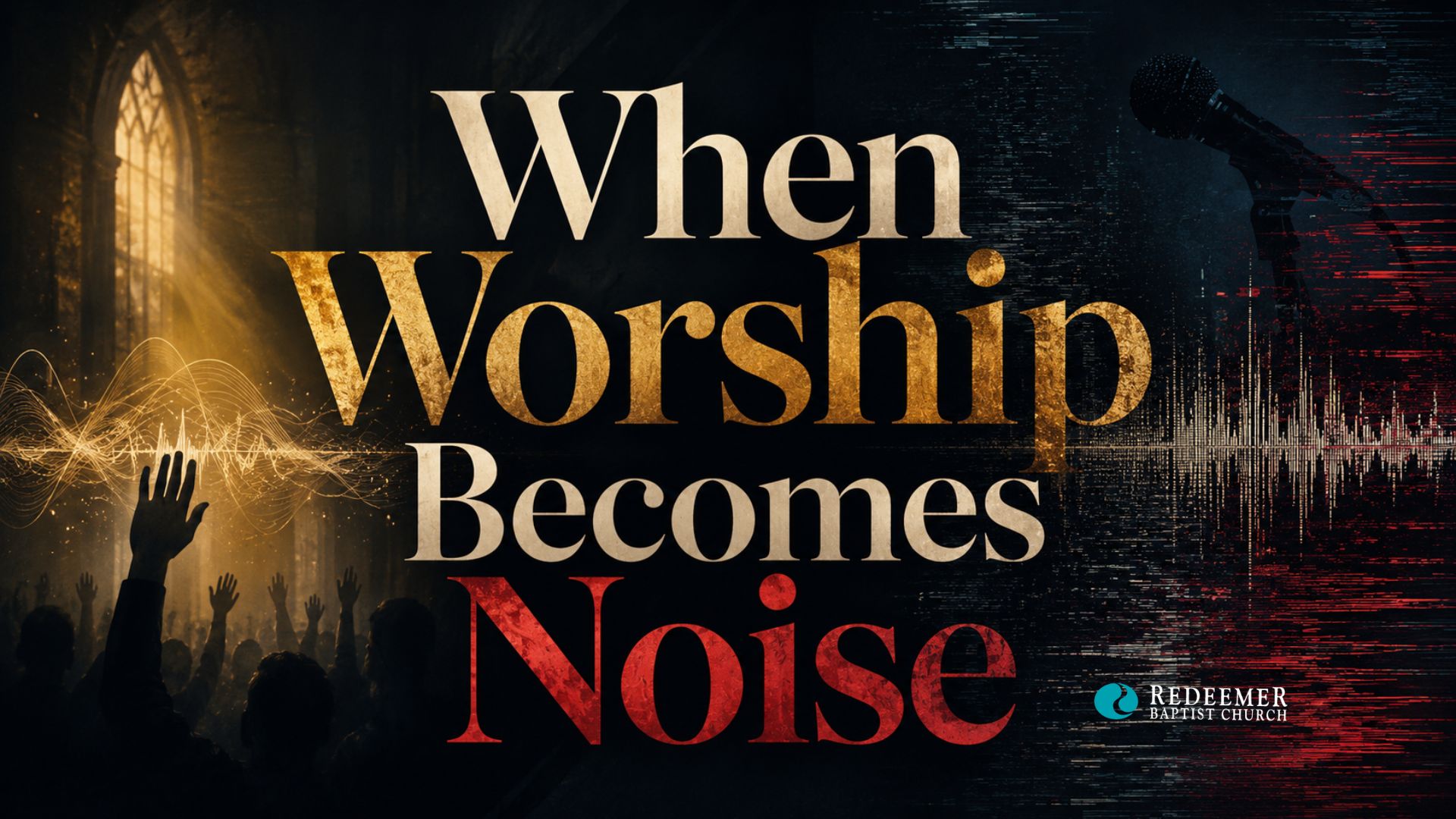
The people called it worship. God called it noise.
That should make every worshiping church pause. We often ask whether the music moved us, whether the service felt meaningful, whether the message spoke to us, whether the morning seemed reverent or joyful. Those questions are not useless, but Amos presses a deeper one: does the worship we offer before God agree with the life we live before Him?
God hears more than the song. He sees the Monday after the hymn. He sees the conversation after the benediction. He sees the way we speak when we are frustrated, the way we treat people who cannot repay us, the way we handle conflict, money, power, truth, and mercy. Worship is not less than what happens when the church gathers, but it is never only that. Worship is the whole self offered to God.
Jesus teaches the same thing when He says that true worshipers worship the Father “in spirit and truth” (John 4:23). Worship is not confined to a place, a style, or a moment. It comes from a life opened before God, a life that tells the truth about who He is and the truth about who we are. It cannot sing surrender while protecting disobedience.
This does not mean our worship must be flawless before God receives it. If that were true, no one could worship. The hope of the gospel is not that we finally produce a perfect life and bring it to God. Our hope is Jesus Christ, the only truly righteous One, who gives Himself for sinners and makes worship possible by grace.
The river God demands is the river Christ provides. He does not merely improve our songs. He makes us a people whose worship begins to take shape in mercy, repentance, reconciliation, justice, and love. He teaches us to bring our whole lives before the Father, not as a performance, but as a living sacrifice.
God is merciful. He refuses the noise because He loves His people too much to let them mistake noise for worship. He is not trying to empty the church of song. He is calling His people back to the kind of worship that can be sung on Sunday and seen on Tuesday.
The question is not only, “Did we sing?” The question is, “Did we listen?”
May our worship never become a hiding place from God. May it become the sound of lives being handed back to Him.